Weekly Ecommerce Technology Roundup: Drone Deliveries Expand, AI Agents Transform Online Shopping and Merchant Operations

The digital commerce landscape is undergoing a massive, technology-driven transformation, highlighted this week by major advancements in drone logistics, the proliferation of artificial intelligence shopping agents, new cross-border financial tools, and enhanced regulatory compliance systems. Retailers globally are racing to adapt to shifting consumer behaviors, heavily influenced by the integration of agentic commerce—AI systems capable of discovering, comparing, and purchasing products on behalf of consumers. As technology providers roll out sophisticated infrastructure to handle everything from ultra-fast air deliveries to automated tax classifications, merchants are presented with both unprecedented opportunities for scale and complex integration challenges.
Logistics and fulfillment continue to serve as critical battlegrounds for ecommerce dominance, prompting heavy investments in autonomous delivery systems and advanced supply chain software. Simultaneously, marketing and customer service paradigms are shifting away from traditional web interfaces toward conversational AI agents and native social commerce applications. Industry stakeholders are closely monitoring these developments, analyzing how emerging tools will alter customer acquisition costs, conversion rates, and operational efficiency across retail sectors of all sizes.

Nationwide Drone Delivery Expansion and Logistics Innovations
Logistics infrastructure is accelerating at an unprecedented pace, marked most notably by Walmart’s dramatic scaling of its drone delivery network in partnership with Zipline. Zipline secured a staggering $1.5 billion in new funding, capital it intends to deploy immediately toward building nationwide capacity, expanding domestic U.S. manufacturing operations, and hiring specialized personnel to satisfy surging consumer demand for ultra-fast air deliveries. By integrating Zipline’s autonomous aircraft into 300 additional Walmart store locations, the retail giant is solidifying its footprint in the hyper-local fulfillment market. This move directly challenges competitors striving to match the speed of modern consumer expectations, turning physical retail storefronts into decentralized fulfillment hubs capable of dispatching goods directly to suburban and urban doorsteps within minutes.
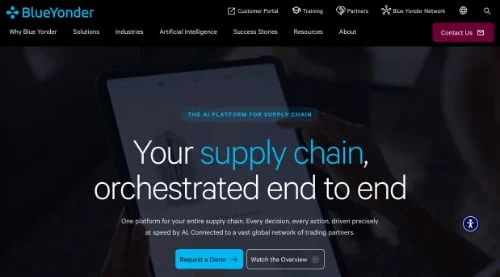
Complementing this physical logistics push, the software side of supply chain management is receiving a heavy infusion of artificial intelligence. Blue Yonder launched its AI-native order management solution as part of its broader Cognitive Solutions suite. Designed to protect retail sales margins while simultaneously driving down fulfillment costs, the platform orchestrates the entire lifecycle of a customer order. From establishing accurate initial delivery promises at checkout through complex warehouse picking, packing, shipping, customer service interactions, and eventual returns processing, the tool provides end-to-end visibility. Retailers and distributors can now leverage cognitive intelligence to dynamically reroute inventory, predict fulfillment bottlenecks, and automate exception handling at a scale previously unattainable through legacy enterprise resource planning systems.
On the post-purchase analytics front, delivery provider Veho introduced Pulse AI, a proprietary platform designed to unlock actionable intelligence from post-purchase logistics data. Historically, retailers viewed the delivery window as the end of the customer journey; however, Pulse AI analyzes what happens after checkout to reveal how specific fulfillment experiences directly influence consumer retention and lifetime value. Anchored by a conversational interface known as Pulse Agent, merchants can query delivery datasets using plain English, instantly generating visual charts and deep analytical insights regarding carrier performance, delivery speed impacts, and targeted relationship-building tactics.

The Rise of Agentic Commerce and AI Shopping Assistants
Artificial intelligence has officially transitioned from a passive backend tool to an active participant in digital transactions, giving rise to "agentic commerce." Microsoft Clarity introduced significant updates to its website analytics platform, rolling out features specifically designed to help businesses track and capitalize on user traffic originating from autonomous AI agents. Through Clarity’s new Brand Agents initiative, eligible merchants utilizing Shopify and WooCommerce can seamlessly display their product catalogs across Microsoft Copilot, Bing, MSN, and other Microsoft-affiliated surfaces. When consumers consult AI assistants for product recommendations or gift ideas, these brand agents surface relevant merchandise, allowing shoppers to complete purchases directly on the merchant’s proprietary website.
Capitalizing heavily on this momentum, Firmly—a specialized platform that enables consumers to purchase merchandise directly within third-party AI agents, digital advertisements, and editorial articles—successfully closed a $15 million Series A funding round. Led by Squarepoint Capital, with notable strategic participation from J.P. Morgan Payments, Mastercard, and Samsung Next, the capital injection underscores the financial sector’s confidence in agent-driven retail. Alongside the funding announcement, Firmly debuted Ask Agent, an intelligent shopping assistant designed for deployment directly on merchant websites. The tool manages natural-language product discovery, facilitates in-chat checkout procedures, and resolves customer service inquiries without requiring human intervention.
Standardization and security protocols are racing to catch up with the rapid adoption of AI agents. Cashfree, a prominent India-based payment processor, updated its hosted checkout infrastructure to support WebMCP, an emerging web standard engineered to govern how AI agents interact with commercial websites. Rather than forcing an AI model to visually interpret a webpage like a human user—a process prone to errors—WebMCP provides structured, defined tools for agents to read order specifications, select appropriate payment methods, and securely display dynamic QR codes. This allows shoppers to complete transactions effortlessly via India’s Unified Payments Interface (UPI). Crucially, the browser explicitly labels these actions, enabling merchants to distinguish automated, agent-assisted transactions from traditional human-driven checkouts for accurate analytics and risk assessment.

Validating the current readiness of these technologies, Visa released its groundbreaking Agentic Commerce Benchmark, an industry-first evaluation framework designed to test leading AI models against rigorous, realistic shopping scenarios. To pass the benchmark, an AI model must accurately interpret a consumer’s nuanced needs through conversation, gather sufficient clarifying details to justify a product recommendation, and exercise sound judgment by declining to purchase when no suitable inventory exists. The results of the initial testing phase revealed significant room for improvement: the 22 evaluated AI models failed an astonishing 42.8% of test runs. By making the benchmark accessible to the general public, Visa aims to drive industry-wide improvements in AI reasoning, security, and transaction reliability.
Search Engine Evolution and Platform Enhancements
Major technology platforms are aggressively altering how consumers discover products, directly impacting organic traffic patterns and conversion funnels for digital merchants. Google is currently testing a direct website button positioned conspicuously beneath each product card within its AI Mode shopping search results. Historically, AI-driven summaries and shopping panels kept users within the search engine’s proprietary ecosystem, directing traffic primarily to free-listing comparison panels. By introducing a frictionless link that routes users straight to the merchant’s dedicated product page, Google’s test signals a potential shift toward supporting direct merchant site traffic, balancing AI convenience with retailer acquisition goals.
In the realm of social commerce, TikTok has quietly deployed a standalone TikTok Shop application for iOS and Android devices across key Southeast Asian markets, including Singapore, Malaysia, Thailand, and the Philippines. This dedicated shopping app aggregates personalized product recommendations, high-engagement livestream shopping sessions, short-form shoppable video content, app-exclusive promotional deals, native in-app checkout flows, comprehensive order tracking, and integrated customer support. By separating e-commerce functions from its core entertainment platform, TikTok is positioning its shop app as a direct competitor to established regional marketplaces, providing brands with an immersive, localized sales channel.

Amazon continues to refine its ecosystem for both consumers and enterprise sellers. For shoppers, the company launched text-based shopping capabilities through Alexa for Shopping, allowing select users to transmit text requests directly to the virtual assistant. Alexa for Shopping parses these messages, identifies requested products, builds customized shopping carts, completes secure transactions, and delivers real-time tracking updates across the Amazon Shopping app and website, with broader consumer rollouts scheduled for the coming weeks. For merchants operating on Amazon.co.uk, the company expanded its Seller Wallet feature to natively support British pounds sterling. U.K. and international sellers can now hold sales proceeds in pounds, pay domestic suppliers directly, transfer funds to local bank accounts, or execute international wire transfers across more than 20 distinct currencies.
Content creation and product catalog management are also experiencing heavy automation. MerchantFloor launched its Product Listing Agent tailored for small Shopify stores, a tool capable of ingesting a single product photograph alongside basic text notes to generate a fully optimized Shopify listing in under five minutes. The AI agent automatically produces clean white-background product shots, contextual lifestyle imagery, model photography, compelling descriptions, search-engine-optimized title tags, meta descriptions, frequently asked questions, and comprehensive image alt text. Merchants retain final editorial control, reviewing and approving the generated assets before the agent pushes the finalized listing live to the storefront.
Marketing Automation, Compliance, and Administrative Infrastructure
Behind the scenes of storefront operations, enterprise software providers are integrating multi-channel communication, legal compliance, customer support outsourcing, and tax automation into unified ecosystems. Zoho upgraded its Zoho Campaigns platform by introducing native WhatsApp marketing capabilities alongside advanced email editing utilities, AI-driven content generation engines, and complex AI agent workflow support. The consolidated dashboard allows digital marketers to orchestrate synchronized messaging campaigns across email, SMS, and WhatsApp, automating repetitive customer touchpoints while maintaining granular performance analytics from a single interface.
Regulatory compliance and data privacy management received a major boost through an integration between Listrak, a prominent email and SMS marketing platform for retailers, and Dataships, a specialized consent management tool. Dataships dynamically evaluates incoming shoppers to serve location-appropriate privacy consent requests across site forms, checkout check-boxes, and confirmation landing pages, ensuring strict adherence to evolving international data privacy regulations. Newly acquired subscribers and their explicit consent statuses flow programmatically into Listrak, enabling brands to execute legally compliant marketing campaigns without risking regulatory penalties.
Customer service operations are similarly evolving through corporate consolidation and technological integration. SupportNinja announced the acquisition of Aventus, a specialized customer experience agency servicing e-commerce brands. The strategic acquisition merges Aventus’s deep platform expertise across Shopify, Gorgias, Kustomer, Redo, and Zendesk with SupportNinja’s proprietary NinjaAI technology, human-supervised artificial intelligence operations, and global workforce. The combined enterprise aims to completely automate routine, transactional customer inquiries, thereby reducing operational overhead and freeing human customer service agents to handle complex, high-touch consumer grievances.
Finally, navigating the labyrinth of global sales tax compliance has become significantly more streamlined with Avalara’s launch of Intelligent Tax Classification. Utilizing an artificial intelligence model trained on over 3 billion distinct items sourced from more than 8,000 brands, the tool automatically assigns accurate tax codes and compliance categorizations to massive product catalogs. Featuring confidence-scored code recommendations, role-based internal approval workflows, and comprehensive audit trails, the solution helps merchants mitigate the risk of costly tax miscalculations and accelerates time-to-market for newly launched product lines. As these diverse technological solutions mature, ecommerce merchants are better equipped to navigate an increasingly automated, globalized, and fast-paced retail environment.